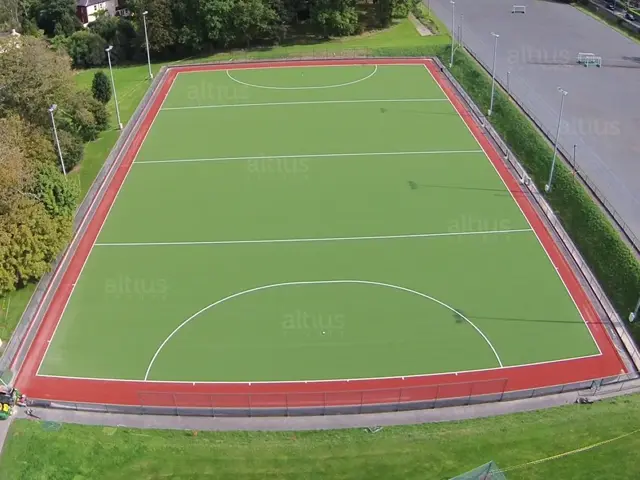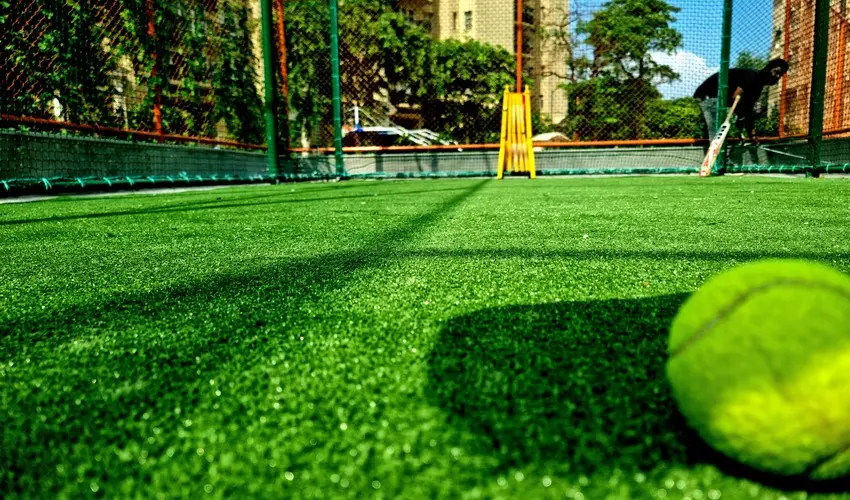
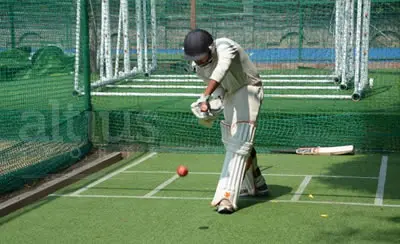
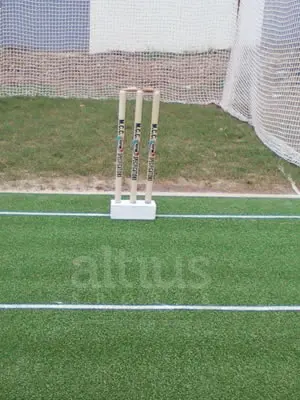
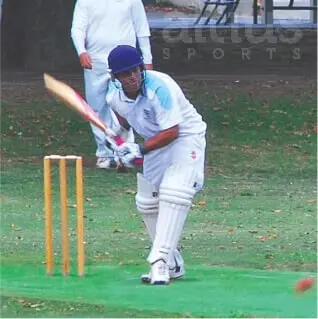
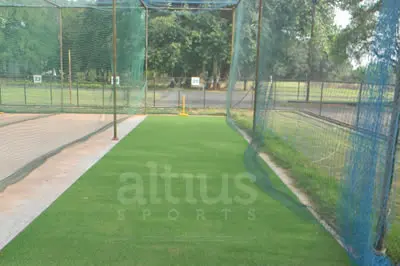
The cricket pitches are ideal for a variety of use match play, in the nets or for indoor/outdoor
training facilities. Our all-weather, flat and free-draining surfaces are great for bowlers run-ups
as well.
From shock pads at the bowler impact area, so that adequate cushioning is provided at time of
release of delivery; to the run-through post-delivery; to outfields where the turf is such that the
ball can race to the boundary, while, at the same time, offering enough cushioning for fielders to
freely dive with TigerTurf you have it all.
We are very proud of every project were involved in at Altius Sports. Read about just a few of them here.
View All
A cricket mat is a temporary, roll-out surface that is used for practice and casual games. It is
portable and is loose laid on the ground. However, it has variable bounce and spin and doesnt give
the best underfoot traction to either the batsman or the bowler. It is a stop-gap arrangement, at
the best, and not durable either.
On the other hand, when you are looking at standalone turf that has been designed and manufactured
only for cricket, you are looking at a premium, high-quality synthetic playing surface that has
been exclusively designed for professional and competitive cricket. It provides a consistent
playing experience, mimicking the performance characteristics of natural grass while offering
durability and is virtually maintenance free. It is installed permanently and engineered to
withstand intensive use, ensuring optimal conditions and consistent ball bounce and spin for
players at all levels. Once again, it is important that you use a turf that has been designed for
cricket and not one that is a compromise for all surfaces that cater to ball bounce sports.
A specialised cricket turf assures you of enhanced longevity and durability, is an all-weather
surface and very high on performance. It provides a consistent ball bounce, is accredited by the
cricketing sports body and when can resume play immediately after rain fall.
Equally important is the fact that it prepares the athlete for matches on the professional level
and is ideal to not just improve your game but also give the much needed practice and confidence.
Cricket is a sport which requires adequate ball bounce on its surface. Whether a pacer is pitching
the ball short or a spinner is lobbing the ball high to induce the batsman to come forward and
miss the line of the ball you need a surface that has adequate ball bounce regardless of pace or
spin. Specialised, standalone cricket pitches are designed in such a way that they replicate the
original cricket pitches, without the need for maintenance. Look for cricket turf which are
densely stitched, have a short pile height, robust backing and playable all year round.
.
Recommended surface on which a cricket turf should be put would be concrete, but you can also
put it on asphalt and wood.
Recommended surface on which a cricket turf should be put would be concrete, but you can also
put it on asphalt and wood.
You need land, be it on ground level or on rooftop level, with enough space for half a
cricket wicket to be placed in the middle with a small run-up for the bowler and some space behind
the wicket for the wicketkeeper. You would need to install a fence with nets so that the ball
doesnt go out of play and it is safe for spectators. The options of lights also works well for
extended hours of play and the outfield should be such that the ball can race to the boundary,
yet, it should be shock-absorbing so that the athlete can dive without the worry of injury.
Usually, the cricket turf is specialised and it is surrounded by a mid-pile football turf for the
outfield.
.
Genuine cricket turf, that can withstand the vigours of consistent play, extreme weather
conditions and professionally made, would be in the range of Rs. 160 to Rs. 240 per sqft.
An ideal size would be minimum 100 x 50 so that there is enough to install half a cricket
wicket with there being space for a bowlers run-up and space behind for a wicketkeeper. However,
anything above 3,500 sqft can work as well.
One has to be mindful of the land parcel, especially the dimensions. It should not be too narrow or too square. Adequate funds should be available to set up the facility and the same should be set up in a place which can draw crowds so that the revenue is enough to make the business not just viable, but profitable as well.
You can change the game format and accommodate it to whatever area is available for you for
indoor cricket and this could define a full cricket wicket or half a cricket wicket. Otherwise, a
recommended size would be 100 x 50.
The thumb rule for setting up a turf for cricket cum futsal would range approximately from
10 lacs to 15 lacs and this depends on the existing base, ground conditions, accessibility,
fence height and type and also the number of light fixtures.
You need a product that not only has a very short pile height but one that is also densely
stitched so that there are no gaps in the turf otherwise, both spin and bounce will get
affected. So if you have anything more than 9mm in pile height, chances are that it will not
only impact the leather ball, but will not be suited for professional play.
You need an outfield that is cushioned, yet, the ball should be able to race to the boundary.
This implies that you need a product that has a medium pile height both in terms of payer safety
and gameplay. If it is a non-infill turf in the outfield, you would need a pile height of 30mm
and if it is an outfield that requires infill, then you are looking at a pile height of 40mm.
A specialised cricket turf, between 7mm and 9mm in pile height, densely stitched and meant
exclusively for cricket with a leather ball is the product you should be looking for and it
should be a non-infill product and direct stuck on the surface.
While there are products that have been certified for a cricket outfield (Cricket Australia has
certified TigerTurf) you need to look at an outfield that is both fast and cushioned. In case it
is a full-sized field, drainage would be equally important. So, you need the athlete to dive
without the fear of injury and, at the same time, you also want the ball to race to the
boundary.
For the ball to bounce, or turn, the cricket pitch in the centre has to be a specialised cricket
turf. Apart from that, the football turf as an outfield is fine for cricket.
Artificial turf for cricket has consistent bounce, is great for spin as well, is hard-wearing
and extremely durable. It is also virtually maintenance free and the surface is all-weather and
can be immediately played upon right after rainfall. Even when it comes to cost, it is cheaper
than any other surface owing to its various qualities as mentioned. However, you need to be
looking for a specialised turf for cricket specifically.
Gluing down the cricket surface on a prepared base usually takes around 4 hours. However, if you
need to prepare the base afresh, that would take about 4 to 6 days and then you would also need
to leave it to cure for anything between 2 to 3 weeks.
Yes, definitely and these dimensions are not narrow and neither are they totally square so there
is enough for a cricket cum futsal turf.
One needs to understand expense. A quality turf that gives the same high level of play, day
after day, year after year, with little need for replacement or maintenance, is actually cheaper
than any other surface. When the athlete gets the same level of play every time, it makes the
entire experience of the sport spectacular. One needs to look at cost of the surface over a
period of time to actually comprehend that a premium product, made specifically for the sport,
is actually more pocket-friendly and this works out to actually become a low expense investment
over the life cycle of the venue.
A cricket mat is a temporary, roll-out surface that is used for practice and casual games. It is
portable and is loose laid on the ground. However, it has variable bounce and spin and doesnt give
the best underfoot traction to either the batsman or the bowler. It is a stop-gap arrangement, at
the best, and not durable either.
On the other hand, when you are looking at standalone turf that has been designed and manufactured
only for cricket, you are looking at a premium, high-quality synthetic playing surface that has been
exclusively designed for professional and competitive cricket. It provides a consistent playing
experience, mimicking the performance characteristics of natural grass while offering durability and
is virtually maintenance free. It is installed permanently and engineered to withstand intensive
use, ensuring optimal conditions and consistent ball bounce and spin for players at all levels. Once
again, it is important that you use a turf that has been designed for cricket and not one that is a
compromise for all surfaces that cater to ball bounce sports.
A specialised cricket turf assures you of enhanced longevity and durability, is an all-weather
surface and very high on performance. It provides a consistent ball bounce, is accredited by the
cricketing sports body and when can resume play immediately after rain fall.
Equally important is the fact that it prepares the athlete for matches on the professional level and
is ideal to not just improve your game but also give the much needed practice and confidence.
Cricket is a sport which requires adequate ball bounce on its surface. Whether a pacer is pitching
the ball short or a spinner is lobbing the ball high to induce the batsman to come forward and miss
the line of the ball you need a surface that has adequate ball bounce regardless of pace or spin.
Specialised, standalone cricket pitches are designed in such a way that they replicate the original
cricket pitches, without the need for maintenance. Look for cricket turf which are densely stitched,
have a short pile height, robust backing and playable all year round.
.
Recommended surface on which a cricket turf should be put would be concrete, but you can also put it
on asphalt and wood.
You need land, be it on ground level or on rooftop level, with enough space for half a cricket
wicket to be placed in the middle with a small run-up for the bowler and some space behind the
wicket for the wicketkeeper. You would need to install a fence with nets so that the ball doesnt go
out of play and it is safe for spectators. The options of lights also works well for extended hours
of play and the outfield should be such that the ball can race to the boundary, yet, it should be
shock-absorbing so that the athlete can dive without the worry of injury. Usually, the cricket turf
is specialised and it is surrounded by a mid-pile football turf for the outfield.
.
Genuine cricket turf, that can withstand the vigours of consistent play, extreme weather conditions
and professionally made, would be in the range of Rs. 160 to Rs. 240 per sqft.
An ideal size would be minimum 100 x 50 so that there is enough to install half a cricket wicket
with there being space for a bowlers run-up and space behind for a wicketkeeper. However, anything
above 3,500 sqft can work as well.
One has to be mindful of the land parcel, especially the dimensions. It should not be too narrow or
too square. Adequate funds should be available to set up the facility and the same should be set up
in a place which can draw crowds so that the revenue is enough to make the business not just viable,
but profitable as well.
Artificial turf for cricket has consistent bounce, is great for spin as well, is hard-wearing and
extremely durable. It is also virtually maintenance free and the surface is all-weather and can be
immediately played upon right after rainfall. Even when it comes to cost, it is cheaper than any
other surface owing to its various qualities as mentioned. However, you need to be looking for a
specialised turf for cricket specifically.
You can change the game format and accommodate it to whatever area is available for you for indoor
cricket and this could define a full cricket wicket or half a cricket wicket. Otherwise, a
recommended size would be 100 x 50.
The thumb rule for setting up a turf for cricket cum futsal would range approximately from 10 lacs
to 15 lacs and this depends on the existing base, ground conditions, accessibility, fence height and
type and also the number of light fixtures.
You need a product that not only has a very short pile height but one that is also densely stitched
so that there are no gaps in the turf otherwise, both spin and bounce will get affected. So if you
have anything more than 9mm in pile height, chances are that it will not only impact the leather
ball, but will not be suited for professional play.
You need an outfield that is cushioned, yet, the ball should be able to race to the boundary. This
implies that you need a product that has a medium pile height both in terms of payer safety and
gameplay. If it is a non-infill turf in the outfield, you would need a pile height of 30mm and if it
is an outfield that requires infill, then you are looking at a pile height of 40mm.
One needs to understand expense. A quality turf that gives the same high level of play, day after
day, year after year, with little need for replacement or maintenance, is actually cheaper than any
other surface. When the athlete gets the same level of play every time, it makes the entire
experience of the sport spectacular. One needs to look at cost of the surface over a period of time
to actually comprehend that a premium product, made specifically for the sport, is actually more
pocket-friendly and this works out to actually become a low expense investment over the life cycle
of the venue.
A specialised cricket turf, between 7mm and 9mm in pile height, densely stitched and meant
exclusively for cricket with a leather ball is the product you should be looking for and it should
be a non-infill product and direct stuck on the surface.
While there are products that have been certified for a cricket outfield (Cricket Australia has
certified TigerTurf) you need to look at an outfield that is both fast and cushioned. In case it is
a full-sized field, drainage would be equally important. So, you need the athlete to dive without
the fear of injury and, at the same time, you also want the ball to race to the boundary.
Yes, definitely and these dimensions are not narrow and neither are they totally square so there is
enough for a cricket cum futsal turf.
For the ball to bounce, or turn, the cricket pitch in the centre has to be a specialised cricket
turf. Apart from that, the football turf as an outfield is fine for cricket.
Of course. Using lights gives you longer hours of play and usually the weather in the evening/at
night is also much cooler.
Gluing down the cricket surface on a prepared base usually takes around 4 hours. However, if you need to prepare the base afresh, that would take about 4 to 6 days and then you would also need to leave it to cure for anything between 2 to 3 weeks.

Oscar Foundation is a football development non-profit organization dedicated to empowering children and youth in low-income communities in India.

Set on a hilltop with a breath-taking view, this pay n play facility has encapsulated the interest of the people of Mizoram.

Altius Sports designed synthetic turf surface for Tashi Namgyal Academy in Gangtok. The first in Sikkim to get the TigerTurf upgrade.